Collection to close
Payments and reconciliation
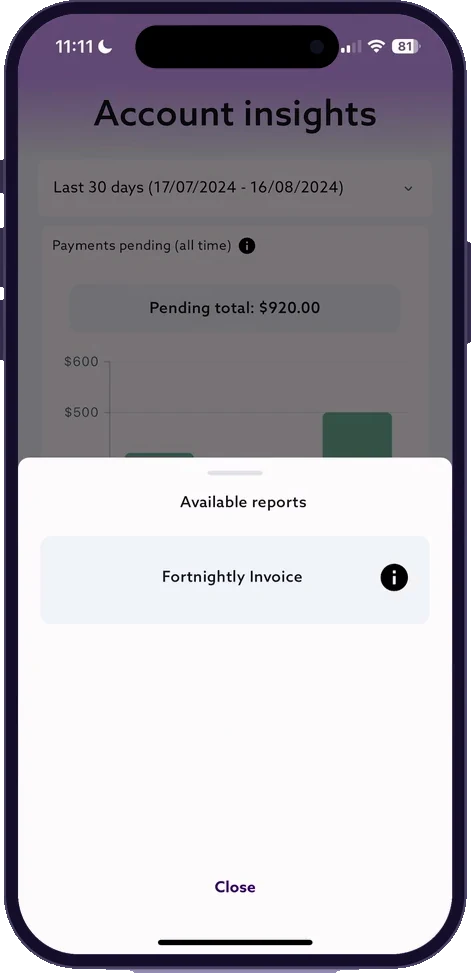
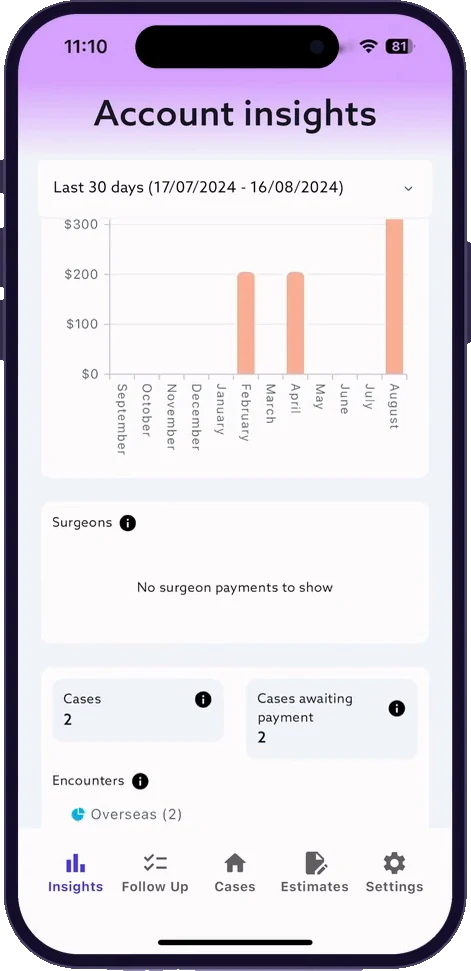
Billing an account, receiving the money and reconciling it are three separate operations. Anaemate keeps them distinct, so a practice can see what has been collected, not just what has been invoiced.
The problem this solves
Invoices raised are only part of the picture. An account can be raised, partly paid, disputed, refunded or never followed up — and all of those states look the same in a system that only records that a bill was issued.
The gap between billed and banked is where private practice income is lost, and it is usually invisible until someone reconciles a bank statement by hand.
How patients pay
Patients can pay by bank transfer at no cost, or by credit card with an additional fee met by the patient. If a procedure is cancelled or an account refunded, card transaction fees are not recoverable from the payments provider.
- Bank transfer, free to the patient
- Credit card, with the additional fee met by the patient
- Card transaction fees are not refundable from the provider
Outstanding accounts are worked, not aged
Overdue amounts are followed up rather than left to accumulate. Where an account becomes a bad debt, Anaemate advises on the options for recovery.
- Structured follow-up on overdue accounts
- Guidance on recovery for bad debts
- Visibility of ageing across the practice
Reconciliation and reporting
Receipts are matched against accounts so that billed, received and outstanding remain three distinct figures. Accounts reconciliation, BAS and end-of-financial-year reporting are included.
- Accounts reconciliation across patient and payer receipts
- BAS and end-of-financial-year reporting
- Refunds tracked against the originating account
- No spreadsheet reconciliation required
Where the money lands
On Anaemate Premium and Anaemate Groups, payments can be received into your own bank account. Groups can be configured with dedicated accounts or with a per-doctor setup.
Reading this screen
- What you are viewing
- Health fund remittances and patient payments, each matched to its invoice and to the bank transaction that paid it.
- Who uses it
- Practice managers and billing staff, from the web dashboard.
- What it supports
- Matching electronic remittance advice to EFT payments, with a variance threshold that clears small differences in either direction.
- What happens next
- Anything outside the threshold is listed as underpaid or overpaid for review.
Who does what
The same record, seen differently by each role
Patient
Pays by transfer or card from the communication they receive.
Billing staff
Works outstanding accounts and handles refunds.
Practice manager
Reconciles receipts and produces BAS and year-end reporting.
Next step
Talk through how your practice bills today
A consultation covers how cases are captured, how quotes and consent are handled, where accounts are being lost, and what moving to Anaemate would involve for your practice or group.