6 min read · Published
In short
- Every patient is verified with Medicare and their health fund as the encounter is created.
- Your billing rules price every case the same way, and estimates, questionnaires and reminders go to patients on their own.
- Claims are lodged through ECLIPSE after a correction window you control, and followed through to payment.
- The bank feed is read every hour, and payments are matched to the invoices they settle.
Step by step
The list arrives
Email the theatre list or upload it in the dashboard, or photograph a sticker in the app. Anaemate’s trained AI models read it, the details are checked, and the encounters are created.
The patient is verified
Every patient is verified with Medicare and their health fund, including DVA and concession checks, whenever an encounter is created or updated. A check that gets no response is retried every 30 minutes.
Your rules price the case
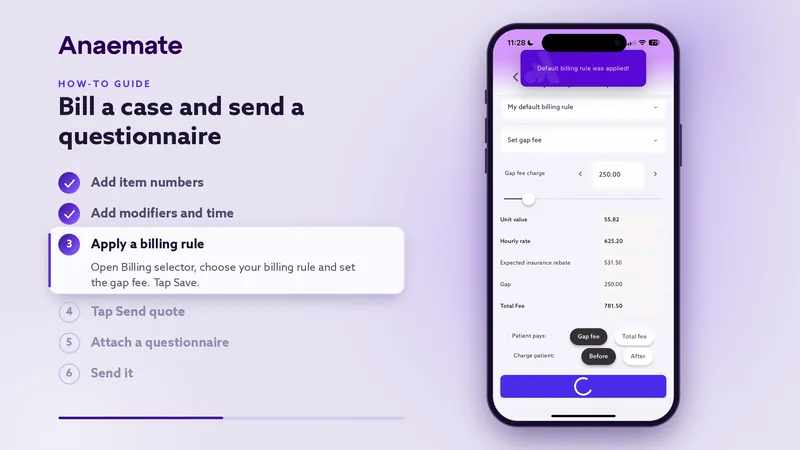
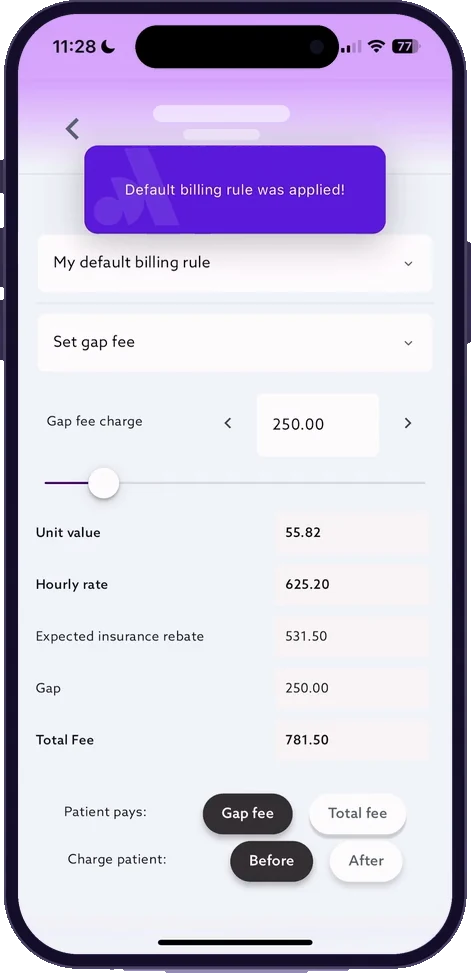
A unit value, a gap fee or a total fee, applied to a whole list or a single case. Presets choose the rule from the patient’s fund or cover and can cap the gap at the fund maximum, and after-hours emergency modifiers are added from the times you enter.
The patient is informed
The estimate, your introduction, your pre-op text and the questionnaire go out by SMS and email, and consent is recorded against the encounter. If consent has not been given by the morning of surgery, the patient is reminded and you are alerted.
The claim is lodged
Submit the bill and Anaemate holds the claim for a correction window, 24 hours unless you change it, or sends it straight away if you choose. It then lodges through ECLIPSE to Medicare, the health funds or DVA, and tries again if a lodgement fails. Workers’ compensation invoices are emailed to the insurer as soon as the encounter is submitted.
Payment is matched
Claim statuses and remittances are checked four times a day, and the bank feed every hour. Transfers are matched to invoices by their reference, remittances to the deposits that paid them, and differences inside your variance threshold reconcile themselves.
Anything overdue is followed up
Patients are reminded by email and SMS before and after the due date, and anything overdue appears in the follow-up lists for you and the practice team.
Small things, handled
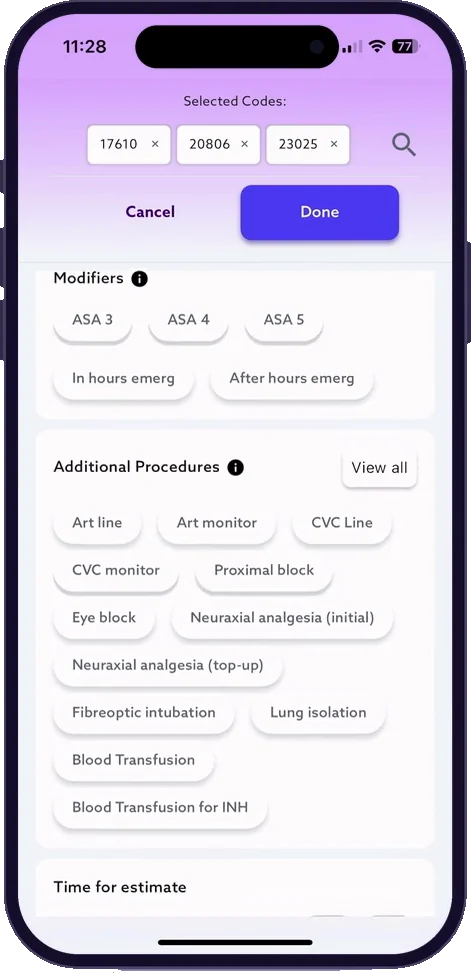
- Anaesthesia items are suggested from the procedure name, or from the items you use most
- If Medicare rejects a claim because the patient’s details don’t quite match, Anaemate verifies them again, corrects them and lodges the claim once more
- Workers’ compensation and transport accident remittance emails are read automatically
- Text messages go only between 8am and 8pm on business days in the patient’s state
- Every night, the published MBS, health fund and workers’ compensation fee schedules are checked, and our team is alerted when one changes
What stays with you
You confirm the item numbers and time for each case, set your billing rules, and look at whatever Anaemate flags: patient details that differ from the record, a claim error, a variance outside your threshold, or an account that needs a conversation.
One active invoice
If an invoice has to be reissued, the new one replaces the old and carries existing payments across, so there is always a single active invoice with the right balance and the full payment history. Item codes can be changed on an unpaid invoice without starting again.
Reports without the spreadsheet
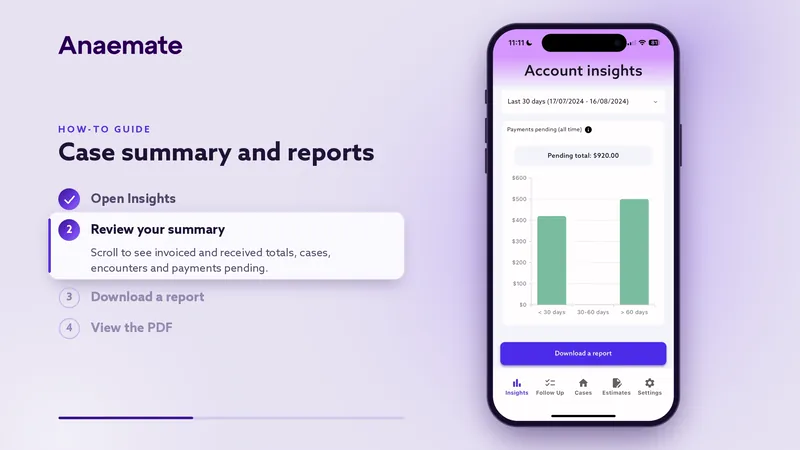
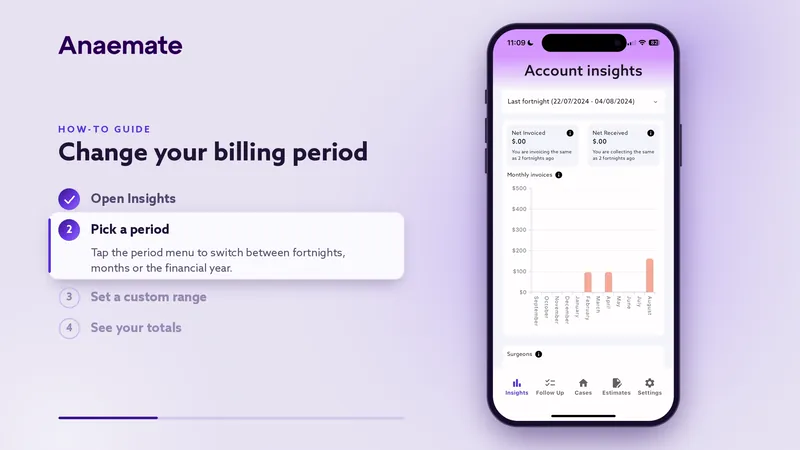
Invoiced and received totals, payments pending, earnings and hourly rate are in the app, with reports you can download as a PDF. BAS and end-of-financial-year reporting are included.