6 min read · Published
In short
- Before the day, patients learn who their anaesthetist is, how to prepare, what it will cost and when it is due.
- Every link is secure and does one thing: patients confirm their surname and date of birth to open it.
- Messages arrive at sensible hours, and payment reminders stop as soon as the account is paid.
- After the procedure, receipts, claim updates and your post-op survey follow on their own.
Before the procedure
Details checked
If anything needs confirming, your team can send the patient a link to check their personal, Medicare and fund details, or to let you know the procedure has been cancelled.
The estimate arrives
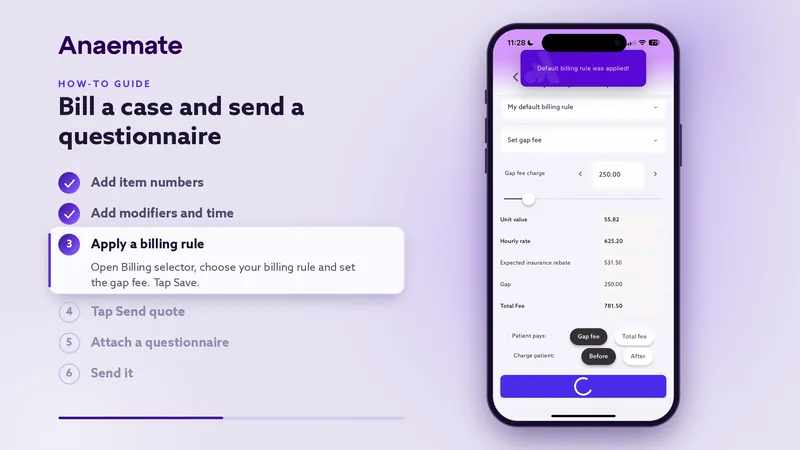
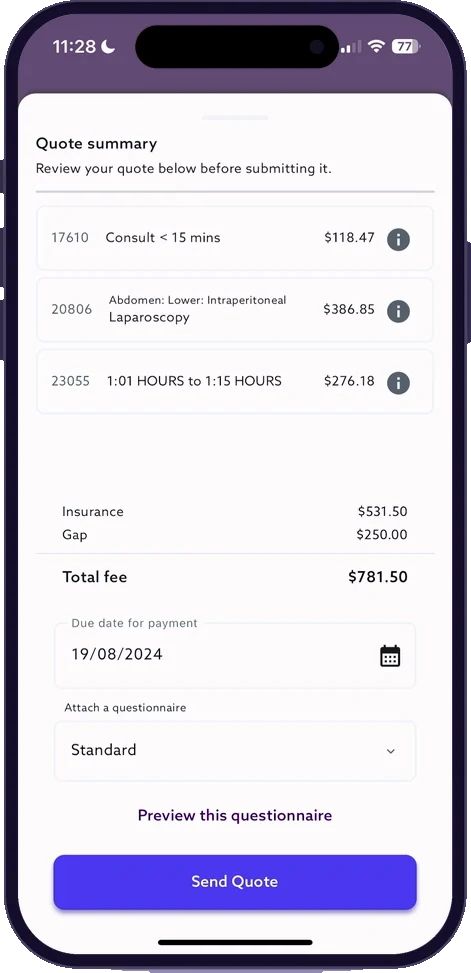
By email and SMS: the doctor, hospital, date and surgeon, the total fee, the expected benefit and the gap, with a link to consent and pay. Your pre-op instructions can be attached.
Consent, and payment if it is due
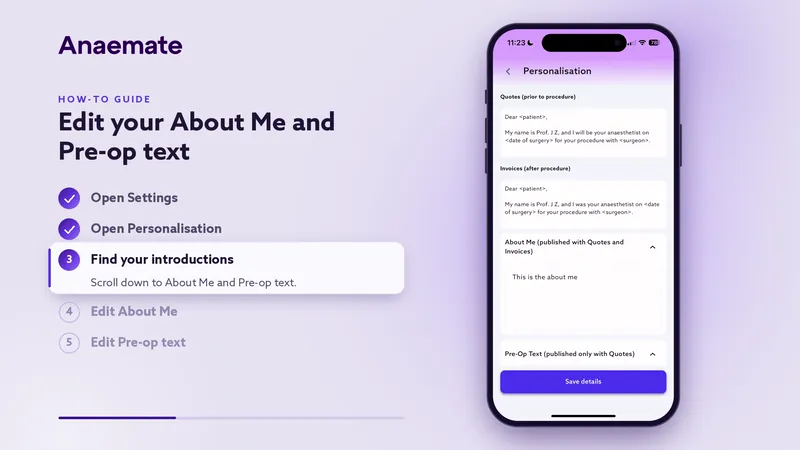
The patient reads the full estimate with your About Me, photo and qualifications, and answers yes or no. Where payment is due before the day, they pay by card or choose bank transfer, and the account details and a unique reference arrive by email and SMS.
The pre-op questionnaire
Linked from the estimate message and the consent page, in adult and paediatric versions. You are notified when it is done, critical answers can be emailed to you, and medication answers such as blood thinners become alerts on the encounter automatically.
Reminders, if they are needed
When payment is due before the day, patients are reminded the day before and on the day, then at one, three and five days overdue. If consent has not come back, they are reminded the day before the procedure and on the morning itself.
What the questionnaire covers
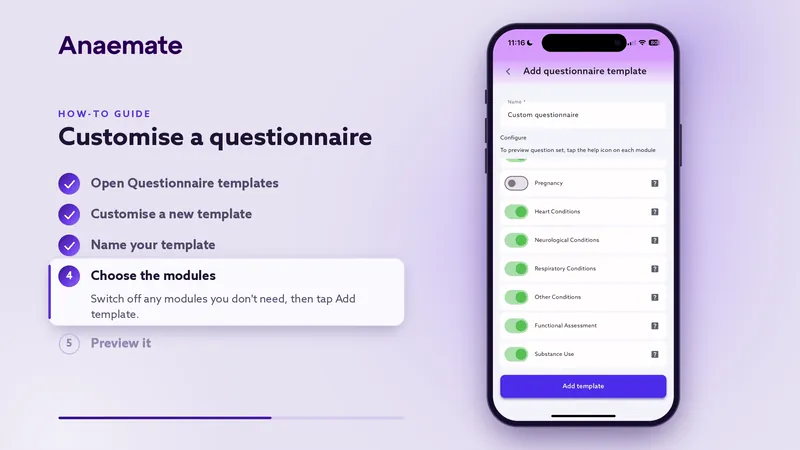
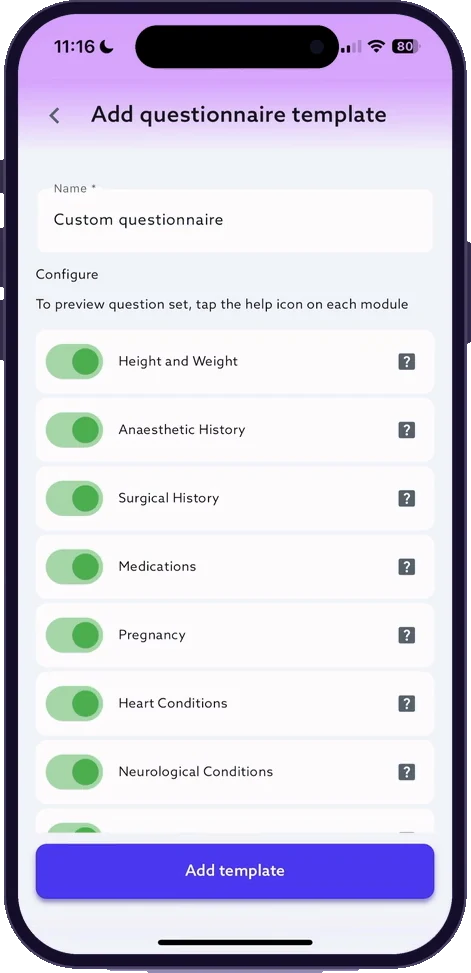
Choose the modules you need for each questionnaire template. The patient can also ask for a call back, and you receive their preferred time by email.
- Height and weight, and anaesthetic and surgical history
- Medications, and pregnancy
- Heart, respiratory and neurological conditions, and anything else relevant
- Functional assessment and substance use
After the procedure
The invoice
Where the account is settled after the procedure, the invoice arrives with a secure link to pay.
Receipts and claims
Receipts arrive by email with a PDF, or by SMS. Patients who claim their own rebate receive the invoice they need with the receipt, and when Anaemate lodges the patient’s claim, they are told the outcome.
Your post-op survey
Once the account is fully paid, your post-op survey goes out after the delay you choose, three days by default, and you are notified when the patient completes it.
Considerate by design
Text messages only go between 8am and 8pm on business days in the patient’s state, skipping weekends and public holidays, and a patient receives no more than one email and one text about an account in a day. Older patients are also offered a number to call, where the practice has one.
There is no account or password to remember. Each link opens after the patient confirms their surname and date of birth, and from the secure patient portal they can download their estimate, invoice or receipt, update their details, give bank details for a refund, or download a claim statement.
Why it gets you paid
When a patient knows before the day what they will pay, why, and how, the invoice holds no surprises, and paying it takes a minute.
Yours to set
In the app, each doctor sets their About Me, pre-op text, photo and qualifications, and chooses their questionnaire, instructions and survey.