6 min read · Published
In short
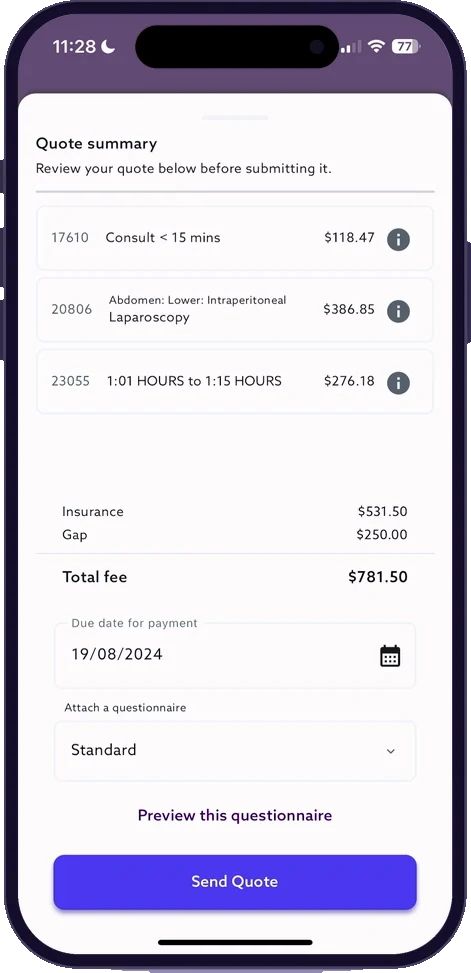
- Your patient sees the whole account: every item with its description and fee, the total, what Medicare and their fund are expected to pay, and the gap.
- They also see who their anaesthetist is, how to prepare, when payment is due, and why the fee can vary.
- They consent online, and a consent record with the date, time and an audit reference is kept with the encounter.
- The estimate comes from the same billing rules that produce the invoice, so the two match.
The whole account, up front
A gap figure tells a patient what they will pay, but not what it is for, who pays the rest, or why it could change. Anaemate’s estimate sets out the whole account, so your patient can see how their share is worked out before they agree to it.
Where the gap is paid before the day, the estimate is issued as a preliminary invoice; otherwise it is an estimate of fees.
- Each item, with its item number, description and fee
- The total fee, including any GST
- What Medicare and their health fund are expected to pay
- The gap: the amount payable, and the date it is due
- How the Medicare benefit will be claimed: by Anaemate, or by the patient
Who, where and when
The estimate names the anaesthetist, with their qualifications, AHPRA and provider numbers, and sets out the surgeon, the hospital and the date of the procedure.
The payment and rebate wording follows your billing rule and the patient’s claim type, whether that is private health, workers’ compensation, a transport accident scheme, defence, DVA, public-in-private, a third party, a cosmetic procedure or an overseas patient. Each patient reads what applies to them.
Why the fee can vary, in plain words
An anaesthetic fee depends partly on how complex the procedure is and how long it takes. The consent page says so plainly, so the patient knows the figure is an estimate, and why.
More than the money
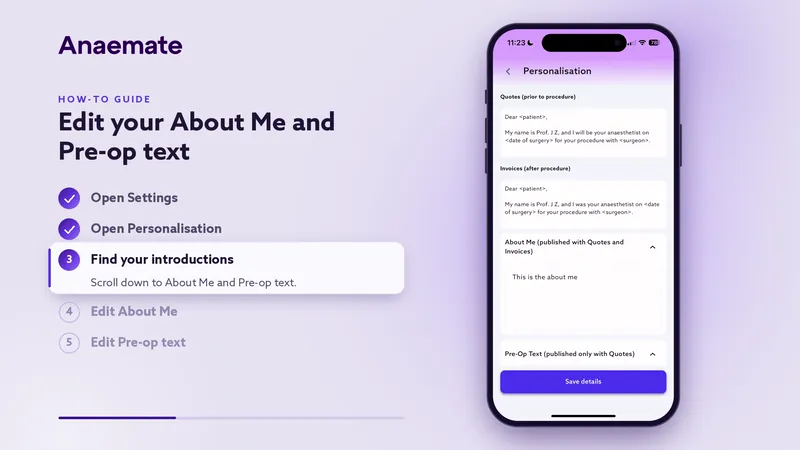
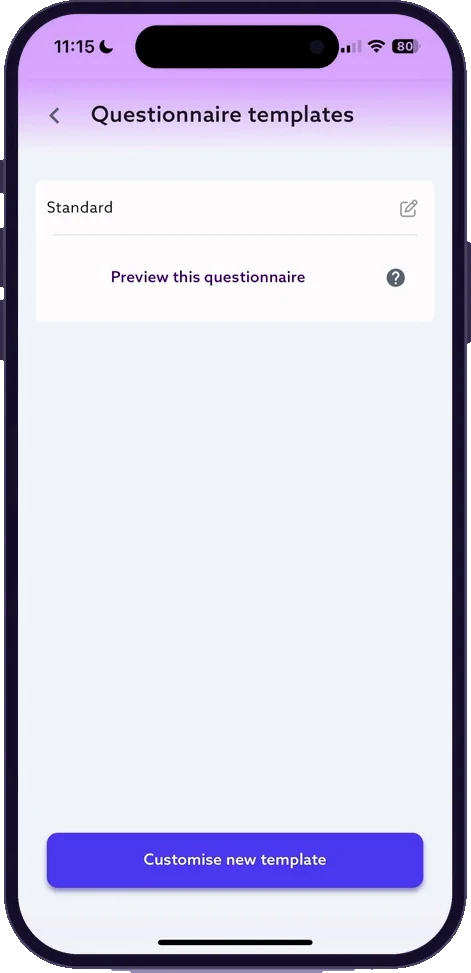
Alongside the fees, the patient sees your About Me introduction, your photo and qualifications, and your pre-op text, with links to your pre-op questionnaire and instructions. Your pre-op instructions can also be attached to the message as a PDF.
Worked out by your rules, not typed by hand
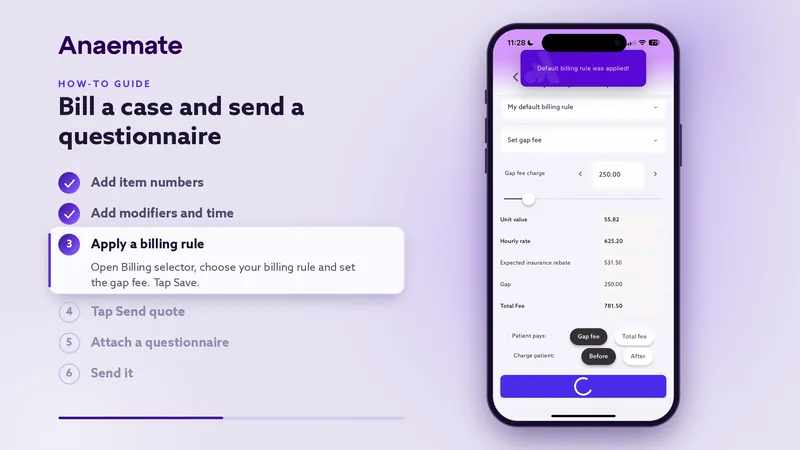
The estimate is calculated from the patient’s fund or payer type, the item numbers and time you select, and your billing rule: a unit value, a gap fee or a total fee. It is the same calculation that produces the invoice, so the estimate and the account come from one source.
How your patient consents
The estimate arrives
By email and SMS, a few minutes after the quote is created or at a time you choose. Text messages only go between 8am and 8pm on business days in the patient’s state.
They confirm who they are
The patient opens the secure link and confirms their surname and date of birth.
They read the whole estimate
The fees, the expected benefit, the gap, the due date and why the fee can vary, with the estimate to download as a PDF.
They answer
Yes or no. Where payment is due before the day, they can then pay by card, or choose bank transfer and receive the account details and a payment reference.
A consent record you can rely on
When a patient consents, Anaemate creates a Patient Financial Consent and Medicare Benefit Record: the statement they were shown, their response, who completed it, the date and time, the method and an audit reference. Your team sees when consent was given, with the record to download. If the patient declines, the practice is emailed.
If consent has not come back, the patient is reminded the day before the procedure and on the morning itself, and you and the practice team are alerted.
Your wording, on Premium and Groups
On Anaemate Premium and Anaemate Groups, your estimate, email and SMS templates are customised for your practice.